
Visual Testing (VT) is the most fundamental and intuitive quality inspection method, typically used for preliminary quality assessments in welding, casting, forging, and other processes.
Within the NDT framework, Visual Testing (VT) is the most basic and straightforward method, frequently serving as a preliminary step to other NDT techniques. It is used for initial quality evaluations of products from welding, casting, forging, and other processes. Shanghai Allmark integrates VT into standardized procedures, combining extensive field experience with professional tools to deliver efficient and accurate quality control solutions for clients.
Inspection Content:
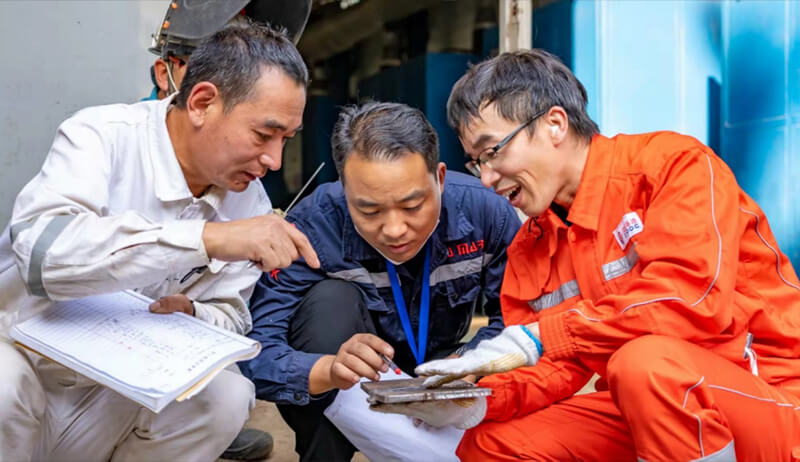
Weld Appearance Inspection: Identifies common surface defects such as cracks, porosity, slag inclusions, lack of fusion, and irregular undercut to promptly assess compliance with design and standard requirements.
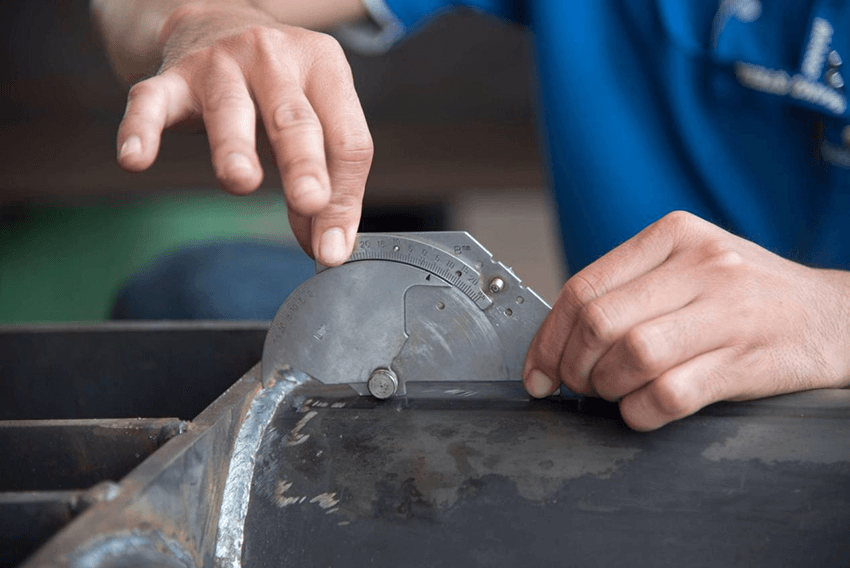
Dimensional Measurements: Ensures geometric accuracy and installation compatibility by measuring weld size, reinforcement, misalignment, groove angle, root gap, and other parameters.
Corrosion and Surface Damage Inspection: Examines surface issues such as rust, oxidation, impact damage, scratches, pits, and coating detachment to evaluate component lifespan and maintenance needs.
Tools Used:
VT relies not only on visual observation but also incorporates professional tools such as magnifiers, weld gauges, weld measurement scales, rulers, protractors, and flashlight illumination devices to enhance precision and efficiency across various working conditions.
As the first critical step in quality control for each engineering project, Visual Testing is an indispensable part of our inspection services. Shanghai Allmark is committed to meticulous inspection practices and systematic testing protocols to build a solid safety foundation for every client.
 Address: Room 101, 1F, Building 5 (T15-5), No. 999 Ningqiao Road, Pudong New Area, Shanghai
 Tel: +86-021-64128191
 Mobile: +86-185 1629 6670(Business)
 E-mail: info@allmark.com.cn













 Sign In
 Tel: +86-021-64128191
 Mobile: +86-185 1629 6670(Business)


 中文
中文 EN
EN