
Nondestructive Testing (NDT)
Shanghai Allmark provides advanced industrial services and nondestructive testing solutions to help enterprises rapidly and accurately assess product quality while minimizing operational disruptions. Utilizing cutting-edge inspection technologies, we efficiently identify equipment abnormalities, ensure smooth production processes, and optimize inspection and maintenance costs. Our on-site and laboratory testing solutions comprehensively support quality assurance for equipment and engineering projects, enhancing operational reliability, productivity, and safety while reducing downtime to a minimum.
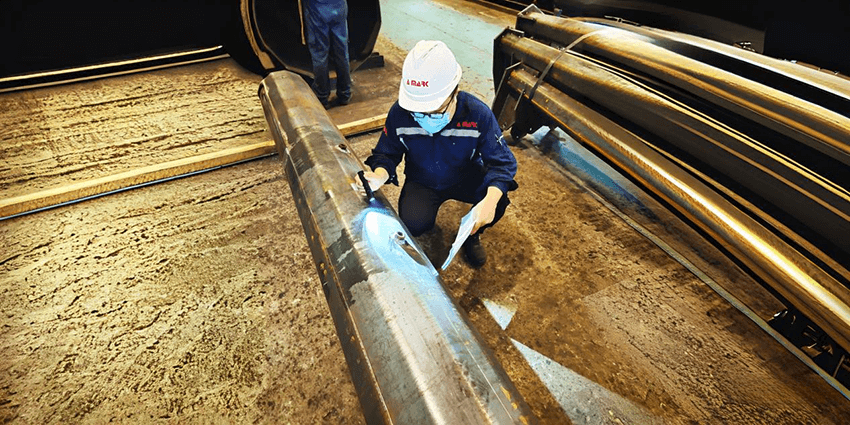
Nondestructive Testing (NDT)
Nondestructive Testing (NDT) refers to the evaluation of welded components and metal materials for internal or surface defects without compromising their structural integrity. It is widely applied in quality control for welded parts, metal materials, and structural components, playing a critical role in industries such as steel structures, pipelines, pressure vessels, bridges, ships, and energy equipment.
As a specialized service provider in welding and engineering projects, Shanghai Allmark Inspection Technology Co., LTD. has accumulated profound expertise in the field of welding engineering, offering comprehensive, standardized, and professional NDT services to help clients ensure structural safety and product quality in various engineering projects.
We offer the following mainstream NDT methods:
Ultrasonic Testing (UT): Utilizes high-frequency sound waves to detect internal defects such as cracks, porosity, and slag inclusions in welds or base materials. Suitable for most metal materials, it offers deep penetration and high sensitivity.
Radiographic Testing (RT): Employs X-rays or gamma rays to capture images of internal weld defects based on differential absorption. Commonly used for quality control in critical components like thick-walled pipelines and pressure vessels.
Magnetic Particle Testing (MT): Magnetizes ferromagnetic materials to detect surface or near-surface defects such as cracks and slag inclusions by observing magnetic particle accumulation. Simple operation and precise localization.
Liquid Penetrant Testing (PT): Applicable to non-ferromagnetic materials (e.g., stainless steel, aluminum alloys). Penetrant liquid seeps into defects, and a developer reveals their locations. Ideal for detecting surface micro-cracks.
Eddy Current Testing (ET): Based on electromagnetic induction to inspect conductive materials for surface and near-surface anomalies like cracks and corrosion. Widely used in aviation, petrochemical, and boiler tube industries.
NDT is applicable to various engineering projects such as steel structures, pipelines, pressure vessels, and ships, effectively ensuring product quality and enhancing safety.
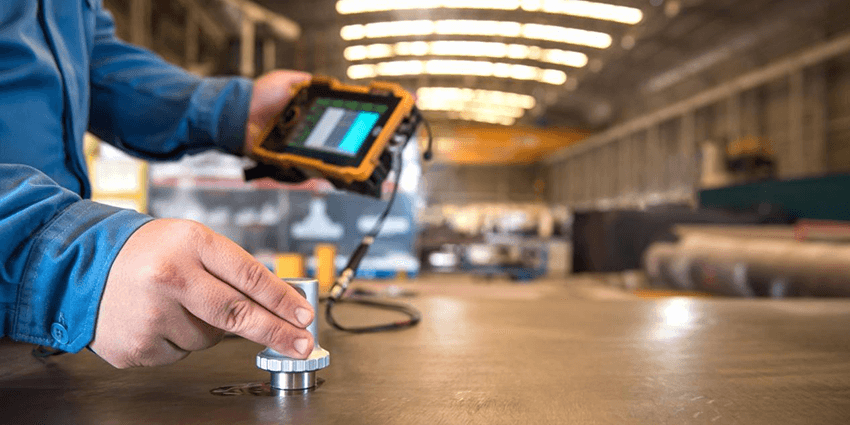
Shanghai Allmark offers NDT personnel training and certification examinations in accordance with Canadian (CAN/CGSB-48.9712), international (ISO 9712), and American (SNT-TC-1A) standards. Training covers a range of NDT methods, including RT, UT, MT, PT, VT, TOFD, PA, and DR (Levels 1-3).
Visual Testing (VT) is the most fundamental and intuitive quality inspection method, typically used for preliminary quality assessments in welding, casting, forging, and other processes.
 Address: Room 101, 1F, Building 5 (T15-5), No. 999 Ningqiao Road, Pudong New Area, Shanghai
 Tel: +86-021-64128191
 Mobile: +86-185 1629 6670(Business)
 E-mail: info@allmark.com.cn















 Sign In
 Tel: +86-021-64128191
 Mobile: +86-185 1629 6670(Business)


 中文
中文 EN
EN