
 Author: Allmark
  Publication Date: 2026-08-11
 The European Union Carbon Border Adjustment Mechanism (CBAM) officially entered into force on January 1, 2026. For steel structure manufacturers exporting to the EU, compliance is no longer a matter of choice — the ability to provide verified actual emission data validated by third parties will directly determine the company’s carbon costs and competitiveness in the EU market.

I. MRV System: The Only Compliant Path to Obtain Actual Emission Values
MRV, consisting of Monitoring, Reporting, and Verification, is the core compliance framework that enables companies to obtain actual emission values and avoid penalties associated with the use of default values.
Monitoring:
The starting point of the MRV system. Through calculation-based or measurement-based approaches, companies accurately collect data on fuel consumption, material inputs, and emissions.
Reporting:
Collected monitoring data is calculated, compiled, and submitted according to the formats and requirements specified by relevant regulations.
Verification:
The authenticity and reliability of emission data are verified by third-party verification bodies recognized by the EU. For the first verification in 2026, an on-site visit is required in principle.
II. Key MRV Requirements for Steel Structure Enterprises
Steel structure products are classified as complex goods. Their embedded emissions consist of both attributable emissions from the production process itself and embedded emissions from precursor materials. The key areas of focus include:
Process Mapping:
Identify and evaluate direct emissions from all production stages, including cutting, assembly, welding, coating, hot-dip galvanizing, and other related processes.
Precursor Material Emission Accounting:
Embedded emissions from precursor materials such as steel billets, sections, and plates represent a major component of the carbon cost of steel structure products. Data quality directly affects the final emission calculation results.
Compliance Monitoring Frequency:
Coal and coke: testing once every 20,000 tonnes, with a minimum of six times per year;
Natural gas: monitoring at least once per week.
III. Monitoring Methodology Document (MMD): The Standardized Framework for the Monitoring System
The Monitoring Methodology Document (MMD) is the documented and standardized representation of the MRV monitoring process. It ensures that monitoring activities remain consistent and comparable over time.
The key contents include:
Selection and calibration procedures for measurement instruments;
Sampling rules for fuels and precursor materials;
Laboratory analysis procedures (which must comply with ISO/IEC 17025 requirements);
Emission calculation formulas and allocation methods;
Dual data verification mechanisms;
Document retention and anti-tampering measures;
Regular improvement plans.
IV. Four Mandatory Data Quality Requirements
Completeness:
All emission sources within the defined system boundary must be included, with no omissions or duplication.
Consistency:
Monitoring methodologies must be transparent and ensure comparability over different reporting periods.
Accuracy:
Gas emission monitoring uncertainty: ≤ ±5%;
Energy consumption monitoring uncertainty: ≤ ±2%.
Reliability:
Emission calculations must comply with regulatory requirements and achieve the highest technically feasible accuracy.
Important Note:
Monitoring equipment must be calibrated every 12 months. All relevant data and supporting documentation must be retained for at least six years.
About Us
As a professional CBAM consulting service provider, Shanghai Allmark has extensive knowledge of EU verification requirements and compliance practices. We assist enterprises with:
Preparing MMD documents that comply with regulatory requirements;
Designing standardized emission data collection procedures;
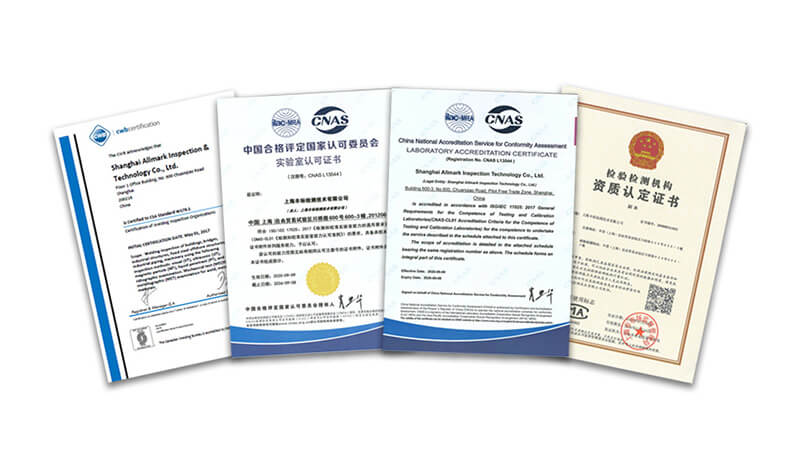
According to EU requirements, arranging third-party laboratory testing for samples through laboratories compliant with ISO/IEC 17025, as well as providing consulting support for establishing in-house laboratories that meet ISO/IEC 17025 requirements;
Providing pre-verification services to help enterprises understand and simulate the verification process in advance, identify gaps, and improve compliance readiness;
Providing full-process support throughout the verification period, including preparation before verification, on-site assistance during verification, and follow-up actions for non-conformity corrections after verification, delivering a complete one-stop service solution.
Our goal is to help our clients establish a strong cost advantage through reliable actual emission data and successfully complete the first CBAM financial settlement by September 30, 2027.
Contact Us
Contact Person: Mr. Yu
Mobile: +86-185 1657 3798
Email: hao.yu@allmark.com.cn
 Address: Room 101, 1F, Building 5 (T15-5), No. 999 Ningqiao Road, Pudong New Area, Shanghai
 Tel: +86-021-64128191
 Mobile: +86-185 1629 6670(Business)
 E-mail: info@allmark.com.cn














 Sign In
 Tel: +86-021-64128191
 Mobile: +86-185 1629 6670(Business)



 中文
中文 EN
EN